
What Water Pressure Does to Your Fixtures and Pipes
Water pressure drives how well every fixture performs, how fast pipes wear, and whether a pressure regulator is needed. Most homes do best between 40 and 60 psi; above roughly 80 psi, fixtures wear out faster and pipes take more stress.
A pressure regulator protects the whole system by holding incoming pressure to a safe level. If your pressure is high or uneven, the regulator is the part that decides whether your plumbing lasts.
What Is Water Pressure and How Does It Affect Fixtures and Pipes?
Water pressure is the force pushing water through your pipes, measured in pounds per square inch (psi). It is set by the supply system or your well pump, not by the fixtures themselves, so every tap, valve and appliance sees the same pressure.
A fixture is any endpoint that delivers or holds water, such as a faucet, toilet, shower valve, water heater or washing machine. Fixtures are built to work within a pressure range, usually around 40 to 60 psi. When pressure runs higher, the internal seals and cartridges work harder and fail sooner.
Pipes wear in two ways under pressure. Constant high pressure stresses joints and fittings, and pressure spikes hammer the pipe walls. Over time that shows up as leaks at connections, pinhole leaks in copper, and failed supply lines. The relationship is simple: the higher the pressure, the shorter the life of the parts that hold it.
How Does Water Pressure Relate to Fixture Performance?
Water pressure changes how a fixture behaves: too low and it underperforms, too high and it wears out early. Most fixtures are designed to perform best in that 40 to 60 psi range.
Low pressure makes a shower feel weak, a toilet refill slowly, and a faucet trickle. High pressure makes a faucet spray and splash, causes water hammer when a valve closes, and can make a toilet run or a shower valve drip. A water heater also feels pressure: high pressure stresses the tank and its fittings, which is one reason water heater problems often trace back to system pressure.
Fixture performance is not only about pressure. Clogged aerators, worn cartridges and mineral buildup change flow too. But when several fixtures act up at once, pressure is the first thing to check.
How Does Water Pressure Cause Pipe Wear?
Water pressure wears pipes by constantly loading joints, fittings and valve seats, and by sending spikes through the system when valves open and close. The damage is cumulative, not sudden.
In most homes the wear shows up first at the weakest points: supply line connections, shutoff valves, and older copper or galvanized pipe. A pressure spike, often called water hammer, is a short burst well above normal pressure. It bangs the pipes and fatigues the metal. Over years that produces pinhole leaks and loose fittings.
High pressure also stresses a water heater tank and its connections, and it can shorten the life of a tankless water heater's internal parts. A pressure regulator absorbs incoming pressure and keeps it steady, which is why it protects both pipes and fixtures.
When Do You Need a Pressure Regulator?
You need a pressure regulator when incoming pressure is consistently above about 80 psi, when pressure spikes, or when several fixtures fail early. A regulator is a valve that reduces incoming pressure to a set level and holds it there.
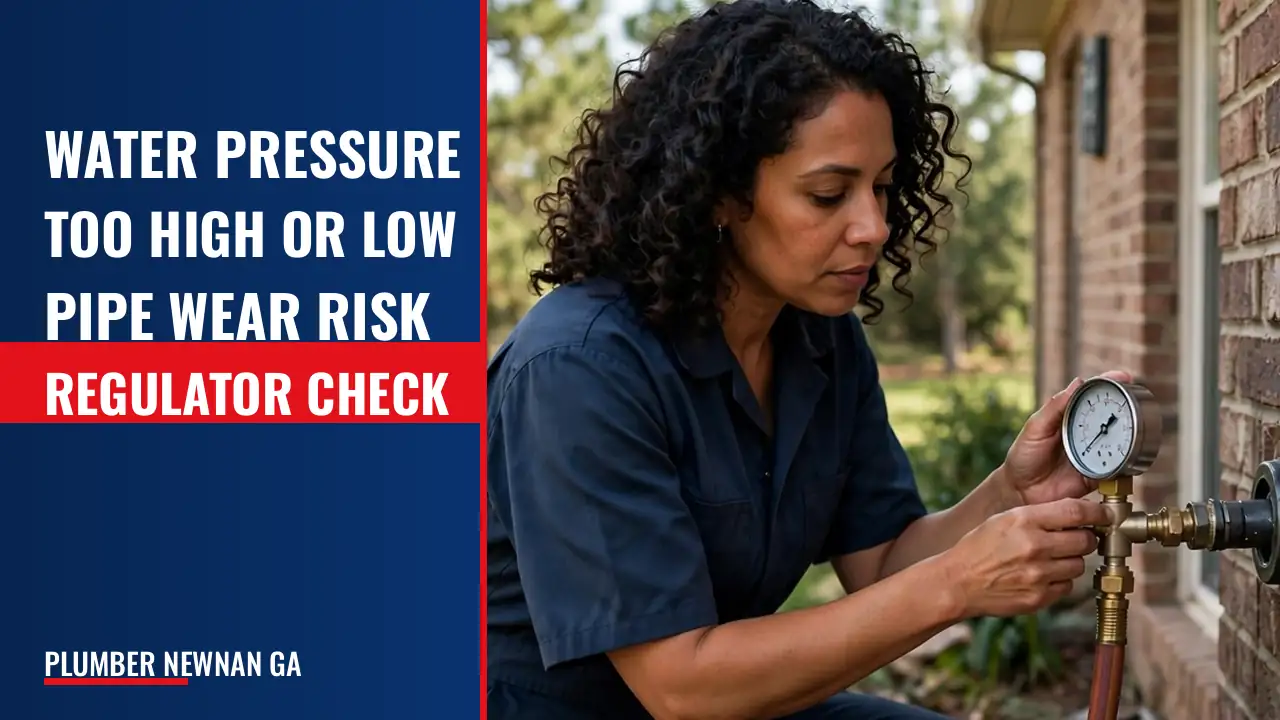
The only reliable way to know is to measure. A simple pressure gauge that screws onto a hose bib gives a reading. Test it more than once, including at different times of day, because pressure can rise at night when demand drops. If the reading stays high, a regulator is the right fix.
Not every home needs one. Homes already on a regulated supply, or with pressure in the normal range, usually do not. A regulator also needs maintenance; if it fails, pressure can creep back up or drop too low.
What Can You Check Yourself, and What Should You Leave Alone?
You can safely measure your own pressure and check a few simple things, but work on the regulator or supply line belongs to a licensed plumber. Start with a hose-bib pressure gauge, which is inexpensive and needs no tools beyond a wrench.
Steps you can take:
1. Screw the gauge onto an outdoor hose bib and open the valve fully.
When Does Water Pressure Become a Job for a Professional?
Water pressure becomes a professional job when the reading is high, when a regulator needs replacing, or when pressure problems have already damaged fixtures or pipes. A licensed plumber can measure accurately, inspect the system, and fit the right regulator.
A plumber also checks the parts pressure affects, such as the water heater, supply lines and shutoff valves. If pressure has caused leaks, that is plumbing repair work, not a do-it-yourself fix. For a full explanation of how pressure problems are diagnosed and repaired, see Plumbing Repair.
Homes on a well need a different check: the pressure tank and pump control the pressure, not a street supply. A failing well pressure tank causes surging or low pressure, and that is a separate repair. You can read about it at Well Pressure Tank Replacement.
How Do You Prevent Pressure Damage?
You prevent pressure damage by keeping pressure in the normal range and checking it now and then. A regulator set correctly and maintained does most of the work.
Check pressure once a year with a gauge, especially if you notice banging pipes or fixtures failing early. Have the regulator inspected if pressure creeps up. Fix small leaks at valves and supply lines before they spread.
For related reading on repair and replacement decisions, see Repair-versus-replace trade-offs are only touched for water heaters; no framework for pipes, sewer laterals, or fixtures. More guides are on the blog.
Water Pressure, Fixtures, Pipe Wear, and Regulators: Questions Answered
Here are the questions homeowners ask most about pressure and its effects.
How does water pressure relate to fixture performance, pipe wear, and the need for a pressure regulator?
Water pressure sets how well fixtures perform and how fast pipes wear. Pressure above about 80 psi makes fixtures fail early and stresses pipes, which is when a pressure regulator is needed to bring it back to a safe range.
What is water pressure relate to fixture performance, pipe wear, and the need for a regulator?
It is the force, measured in psi, that pushes water through your plumbing. That force drives fixture flow, loads pipe joints, and decides whether a regulator is required to protect the system.
How does water pressure relate to fixture performance, pipe wear, and the need for a regulator work?
Pressure is set at the supply or well pump and reaches every fixture equally. A regulator reduces incoming pressure to a set level, so fixtures get steady flow and pipes see less stress.
What should I know about water pressure relate to fixture performance, pipe wear, and the need for a regulator?
Most homes do best between 40 and 60 psi. Measure with a hose-bib gauge, watch for banging pipes or early fixture failures, and leave regulator work to a licensed plumber.