
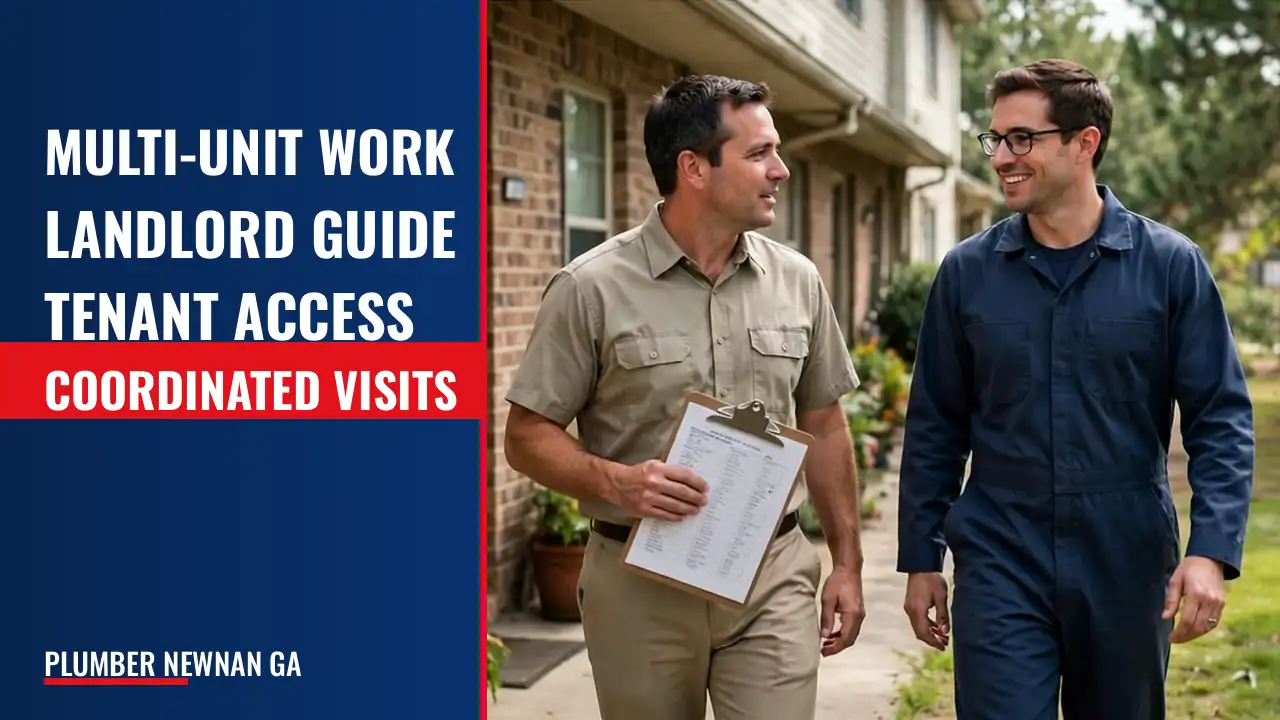
What a landlord or property manager should do first
Coordinate multi-unit work by grouping units into one visit, giving tenants written notice with a firm access window, and putting one person in charge of keys, access and the work order. The landlord or manager owns the schedule and the tenant contact; the plumber owns the diagnosis and the repair.
That split is the whole method. Tenants cooperate when they know the date, the time range and what will happen inside their unit.
Why does multi-unit plumbing work need a coordinator?
Multi-unit plumbing work needs a coordinator because one repair often touches shared pipes, shut-off valves and several tenants at once. A single riser, stack or main serves more than one unit, so shutting water off for one repair can interrupt the whole building. Someone has to decide who is told, when, and who holds the keys.
A coordinator also protects the diagnosis. When a manager collects the symptoms from each unit before the visit, the plumber arrives knowing which fixtures fail, when they fail, and whether the problem is one unit or the stack. That shortens the visit and reduces repeat trips. Without it, the plumber spends the first hour repeating questions the manager could have asked.
What should the coordinator gather before the plumber arrives?
The coordinator should gather a short written record for each affected unit: what the tenant sees, when it started, and whether it happens all the time or only when another fixture runs. This record turns a vague complaint into a diagnosis the plumber can test.
Collect the unit number, the fixture involved, and whether water backs up, drains slowly, or leaks at a joint. Note whether the tenant has already tried a plunger or chemical drain cleaner, because chemicals can damage pipes and change how the plumber works. Ask whether the problem appears when a neighbouring unit uses water, which points to a shared drain or vent. Keep the record to a few lines per unit; the plumber needs facts, not stories.
How should tenant access be arranged and documented?
Tenant access should be arranged in writing, with a stated date, a time range and a named person who will open the door or provide a key. Verbal agreements fail on the day, and a plumber standing outside a locked unit costs everyone a return visit.
Most leases and local rules require notice before entry except in an emergency, so the manager should check the lease and any local requirement before setting the window. Send the notice in the same way the tenant normally receives building messages, and keep a copy. Confirm access the day before by phone or message, and again on the morning of the visit. For units where the tenant cannot be home, agree in advance on a key or escort arrangement and record who held the key and when it was returned.
How should units be grouped so one visit covers the building?
Group units by the plumbing they share, not by floor number or tenant convenience. Units on the same stack, riser or branch often fail for the same reason, so inspecting them together finds the source once instead of three times.
Start with the units that reported the problem, then add the units above, below and beside them on the same line. A camera inspection of the sewer line or a pressure test of the water lines can confirm whether the fault is local or shared. Grouping also lets the plumber plan shut-offs: one planned shutdown for several repairs is easier on tenants than several unplanned ones. Where a water heater serves more than one unit, include it in the same visit so its condition is checked while access is open.
What changes the plan once work starts?
The plan changes when the plumber finds a fault behind a wall, under a slab or inside a shared line, because that work may need a longer shutdown, a second visit or a different access route. A slow drain that looked local can turn out to be a collapsed sewer line serving several units.
Other conditions shift the schedule: a tenant who refuses access, a unit with an aggressive pet, or a building where the only shut-off valve is seized. Older buildings often have valves that no longer close fully, so the plumber may need to isolate a wider section. Weather matters for underground or exterior work. The coordinator should keep a fallback window and tell affected tenants early if the scope grows. Video pipe inspection is often the tool that settles whether a problem is one unit or the whole line.
What can the coordinator handle
The coordinator can safely handle notice, access, record-keeping and simple tenant instructions such as clearing belongings from under a sink. Anything involving opening a pipe, gas, sewer gas, or the water heater's electrical or gas connection belongs to a licensed plumber.
Safe coordinator tasks include confirming which fixtures are affected, asking tenants to stop using chemical drain cleaners, and making sure the shut-off valve location is known. Coordinators should not open cleanouts, remove toilet tanks, or attempt drain cleaning with a rented auger in a multi-unit line, because a wrong pass can damage the shared pipe and affect every unit below. Gas smells, sewage backup into multiple units, and water running through a ceiling are not do-it-yourself situations. A licensed master plumber carries the insurance and training for that work, and the coordinator's job is to keep access open and tenants informed.
How should the work be documented for the property record?
Documentation should record what was found, what was repaired, which units were entered and what remains open. A property manager who keeps that record can show due diligence to an owner and avoid repeating the same diagnosis next year.
Ask the plumber for the unit numbers visited, the cause found, the parts replaced and any recommendation for follow-up. Photographs of the failed part and, where used, camera footage of the line are useful evidence for an owner or insurer. Keep the notice copies and access log with the work order. For landlords running several properties, one provider who documents every visit is easier to manage than a different lowest bid each time, as this guide on multi-unit scheduling and documentation explains. Routine checks on shared water heaters and drains belong in a maintenance agreement so small faults are caught before they reach several units.
Common questions about coordinating multi-unit plumbing work
These are the questions landlords and property managers ask most often when planning work across several units.
How should a landlord or property manager coordinate multi-unit work and tenant access?
Group the units by shared plumbing, send written notice with a firm access window, and name one person to hold keys and the work order. Confirm access the day before and keep a record of every entry.
What is multi-unit plumbing coordination?
It is the management of one plumbing visit across several units so shared lines are diagnosed once and tenants are disturbed as little as possible. It covers notice, access, grouping and documentation rather than the repair itself.
How does a coordinator decide which units to include?
Include the reporting units plus the units above, below and beside them on the same stack or riser. A camera inspection or pressure test confirms whether the fault is local or shared before more units are added.
What should I know about tenant access and emergency plumbing?
Emergency entry rules differ from routine notice rules, and gas smells or sewage backups into several units are emergencies. For those, call the plumber first and follow the lease and local rules on entry; this emergency triage guide explains what to shut off and what to expect on arrival.