
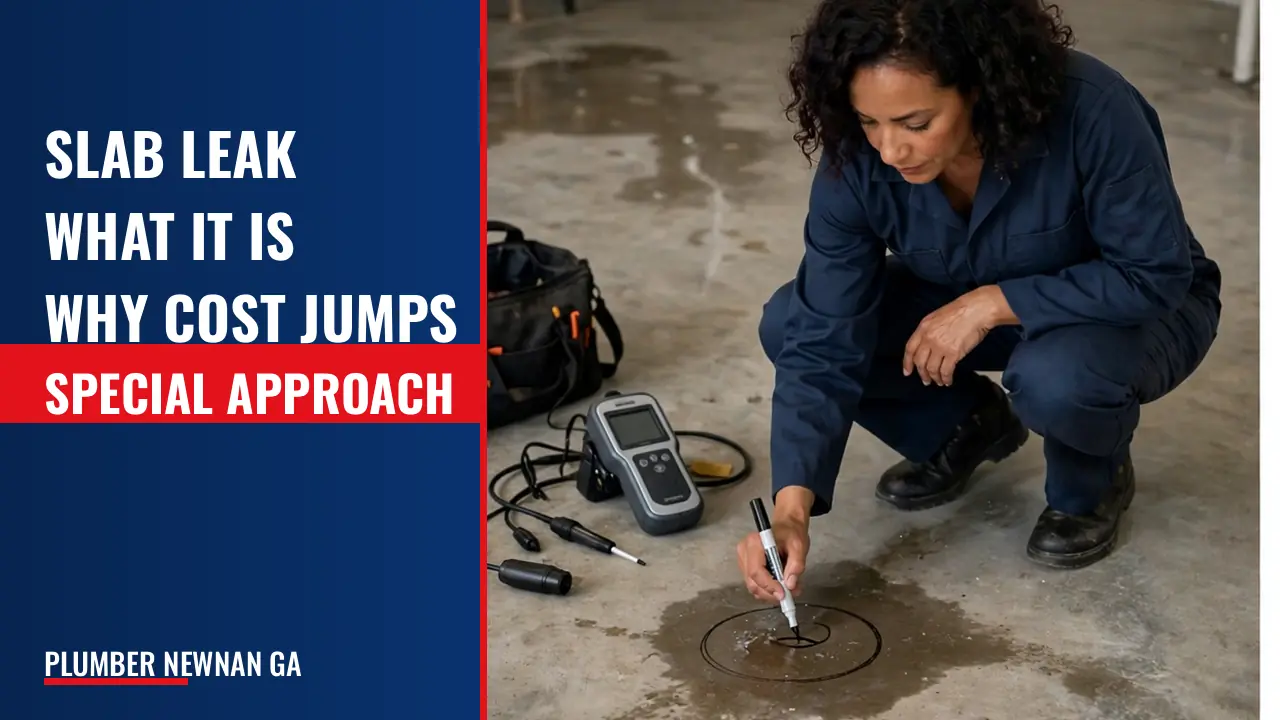
What a slab leak is, and why it changes everything
A slab leak is a water leak in a pipe that runs beneath a concrete floor slab, usually under a home built on a slab foundation. Because the pipe is buried in or under concrete, finding and fixing the leak means opening the floor or rerouting the line, which is why the cost and the approach differ so much from a leak in a wall or under a sink.
How does a slab leak happen in the first place?
A slab leak happens when a water line under the concrete fails, and the most common causes are pipe material, ground movement, and water chemistry. Copper lines can wear from the inside as water erodes the pipe wall, and they can also be attacked from the outside by aggressive soil. PEX and other flexible lines can fail at fittings or where they rub against concrete or rebar.
Ground movement matters more than most homeowners expect. A slab is not perfectly rigid, and small shifts over years can stress a pipe until it cracks or a joint pulls apart. High water pressure makes all of this worse by putting constant strain on every joint.
The leak itself is often slow at first. Water finds the path of least resistance, which may be up through the slab into flooring or down into the soil beneath. That is why the first sign is sometimes a warm spot on the floor, a sound of running water when nothing is on, or a water bill that climbs without explanation.
Why does a slab leak cost more to repair than a leak in a wall?
A slab leak costs more because the pipe is not accessible, so the repair includes work that has nothing to do with the pipe itself. A wall leak is usually behind drywall, which is easy to open and close. A slab leak sits under finished flooring and poured concrete, and getting to it means cutting, breaking, and later restoring.
The cost breaks into three parts. First is detection: finding the leak without tearing up the whole floor. Second is access: opening the slab or rerouting the line above ground. Third is restoration: patching concrete and putting the floor back. The pipe repair itself is often the smallest of the three.
That is why the approach changes. A plumber does not start by breaking concrete. They start by narrowing down where the leak is, then choose between a spot repair, a reroute through the attic or walls, or a larger repipe. Each option carries a different cost and a different amount of disruption.
What is included in the price of a slab leak repair?
The price of a slab leak repair usually includes detection, access, the pipe repair itself, and some level of restoration, but what is included varies by company and by the method chosen. A spot repair under the slab includes cutting and breaking concrete, fixing the pipe, and patching the concrete back. A reroute does not open the slab at all but adds new pipe through walls or attic.
Detection is a line item on its own in many cases. Electronic leak detection, acoustic listening, and a camera inspection of the line help locate the failure before any concrete is opened. Skipping that step is how a small repair turns into a large one.
Ask what is excluded as carefully as what is included. Concrete patching, flooring replacement, and drywall repair are often separate. A written scope that lists each of these is the only way to compare one approach to another fairly.
What makes one slab leak repair cost more than another?
The biggest cost factors are where the leak sits, what is above it, and how many lines are involved. A leak under a tiled bathroom floor costs more to reach than one under a bare garage slab. A leak in a single line is simpler than a cluster of failures in the same area.
Pipe material changes the approach. Copper can sometimes be repaired in place, while older or brittle lines may fail again nearby, which pushes the decision toward a reroute or repipe. Water pressure and water chemistry also matter, because a line that failed once under aggressive conditions is likely to fail again.
Access is the wild card. A slab leak near an exterior wall may be reachable from outside. One in the middle of a finished room means moving furniture, protecting flooring, and restoring more afterward. That is why two slab leaks that sound the same on the phone can carry very different costs.
What can I do myself, and what should I leave alone?
You can safely confirm that you have a leak and gather information for a plumber, but you should not open a slab or cut into a pressurized line yourself. The safe steps are about evidence, not repair.
1. Shut off every fixture and appliance that uses water, then watch the water meter. If the meter still moves, water is escaping somewhere.
2. Listen at the floor near the water heater, bathrooms, and kitchen for running water when nothing is on.
A slab leak becomes a professional job as soon as you suspect one, because locating it accurately requires detection equipment and repairing it requires opening a slab or rerouting a line. A licensed master plumber has the tools to find the leak without guessing and the insurance to stand behind the work.
The risk is not only the pipe. Water under a slab can damage flooring, cabinets, and the foundation itself, and a repair that is not done to code can fail again. A plumber also checks water pressure and the condition of nearby lines, which is how a small repair is kept from becoming a repeat visit.
If you smell gas, see active water coming up through the floor, or have lost water pressure entirely, treat it as urgent. The guide on how to get help right now for an active leak, backup, or gas smell explains what to do first.
How can I keep the cost of a slab leak repair down?
The best way to keep the cost down is to catch the leak early and to know your options before concrete is opened. A leak found while it is still small is cheaper to locate and cheaper to access. Waiting usually adds water damage and restoration to the bill.
Ask for detection first and a written scope second. Compare a spot repair against a reroute, because a reroute avoids concrete work entirely and may be the better long-term value. Keep water pressure in a normal range, because high pressure wears out joints and fittings faster.
Maintenance matters too. A periodic check of the water meter, the water heater, and visible pipe runs catches changes before they become slab leaks. The broader guide on how a plumber diagnoses a leak, clog, or failed system explains what that inspection looks for.
Slab leak questions answered
Here are the questions homeowners ask most often once they suspect a slab leak.
What is a slab leak, and why does it change the cost and approach of a repair?
A slab leak is a water leak in a pipe under a concrete floor slab. It changes the cost and approach because the pipe is not accessible, so the job includes detection, breaking or avoiding concrete, and restoring the floor, not just fixing the pipe.
What is included in the price of a slab leak repair?
The price usually includes leak detection, access to the pipe, the repair itself, and some concrete patching. Flooring and drywall restoration are often separate, so ask for a written scope that lists what is included and what is not.
What is a fair price for a slab leak repair?
There is no single fair price, because the cost depends on where the leak sits, what is above it, and whether the repair is a spot fix or a reroute. A fair price is one tied to a clear scope after detection, not a number given before the leak is located.
How can I keep the cost of a slab leak repair down?
Catch the leak early, ask for detection before any concrete is opened, and compare a spot repair with a reroute. Keeping water pressure in a normal range and checking the meter periodically also helps prevent a small leak from becoming a large repair.