What Repiping Means and When It Is Needed
Repiping is replacing some or all of the water supply and drain pipes inside a home with new pipe, usually because the old pipe is failing, leaking, or clogged beyond reliable repair. You need it when a plumber confirms that corrosion, pinhole leaks, or repeated blockages have made the existing lines unreliable, not just one isolated problem. For more on home plumbing topics, see our blog.
The decision turns on the pipe material, the number of failures, water pressure, and whether the lines are buried in slabs or walls.
How does repiping and when do you need it work?
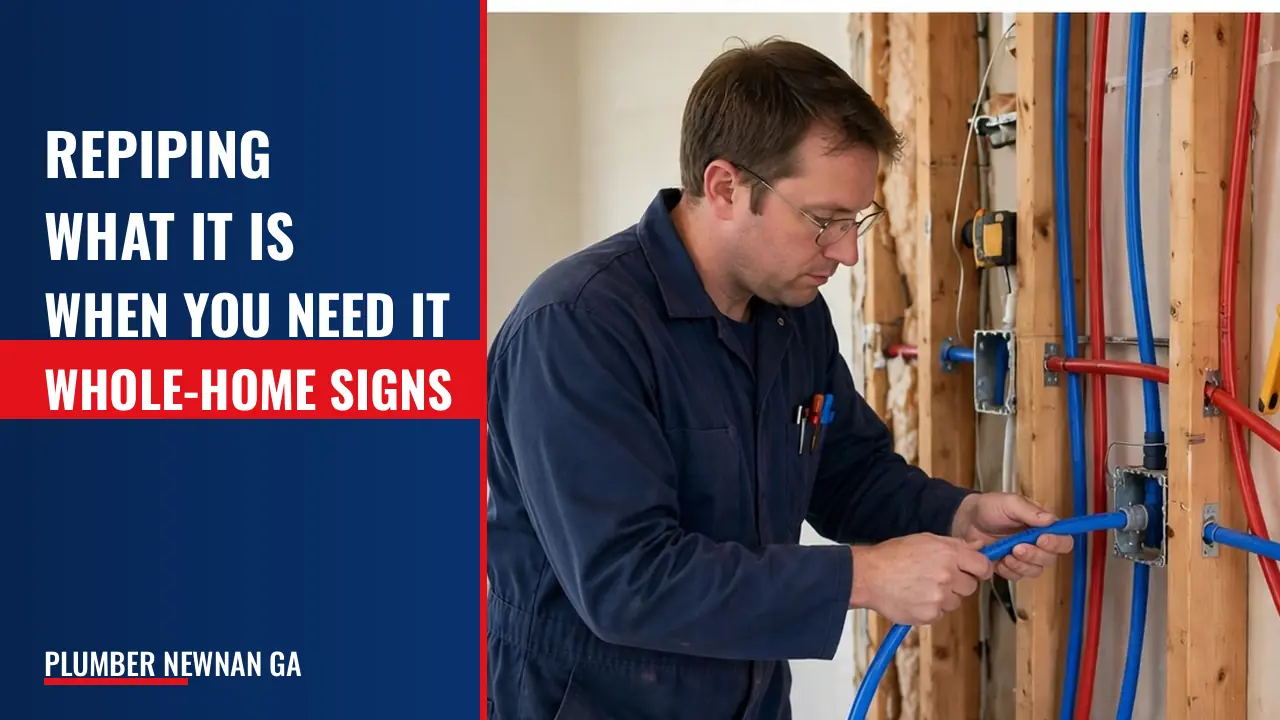
Repiping works by removing the old supply or drain lines and running new pipe through the same paths, so water reaches fixtures through clean, sound material again. A plumber maps the system first, shuts off the water, opens access points, pulls or abandons the old pipe, and installs new lines, then pressure-tests and restores the openings.
Supply repiping usually uses copper or PEX. Copper is durable and handles heat well; PEX is flexible, resists freezing better, and needs fewer joints, which reduces leak points. Drain repiping uses ABS or PVC and must keep the correct slope so waste flows to the sewer line. The best material depends on your water chemistry, the route through the house, and local code.
The work is planned in stages because walls, ceilings, and slabs may need opening. A good plan limits damage and restores finishes cleanly. Repiping is different from drain cleaning: cleaning clears a blockage inside an existing pipe, while repiping replaces the pipe itself.
What signs mean you may need repiping?
The signs that point to repiping are repeated leaks in the same pipe type, discolored water from corroded metal, low pressure across many fixtures, and drains that clog again soon after cleaning. One leak is a repair; a pattern of failures across the system is the signal to evaluate replacement, and our water softener repair service can help with related water quality issues.
Galvanized steel pipe often rusts from the inside, narrowing the bore and tinting water brown. Polybutylene pipe becomes brittle and can fail suddenly. Copper can develop pinhole leaks where water is aggressive. Cast iron drains corrode and rough up inside, catching waste. These are material-level problems, so patching one spot leaves the rest of the same pipe in place.
A camera inspection of drains and a pressure test of supply lines show the condition rather than guessing. Ask for the findings, including footage or a written report, so the recommendation is based on evidence.
When does repiping matter more than a repair?
Repiping matters more than repair when the pipe has failed in several places, when failures are hidden in slabs or walls, or when water quality and pressure have dropped throughout the house. In those cases a repair buys time but does not change the condition of the remaining pipe.
Repair is often the right call for a single accessible leak, one clogged drain, or a short section of damaged pipe. Repiping is the better answer when the cost and disruption of repeated repairs approach the cost of replacing the system, or when a leak is causing water damage that will recur.
Hidden lines raise the stakes. A slab leak or a leak inside a wall can damage flooring and framing before it is visible. Repiping those runs removes the source instead of chasing it.
What should I know before repiping a house?
Before repiping, know which pipes are being replaced, how access will be made, and how the work will be tested and restored. A clear scope separates supply from drain work and states what is included in patching and finishing.
Expect disruption. Water is off during parts of the job, walls or ceilings may be opened, and the schedule depends on the size of the house and how the pipe is routed. Plan for a few days in most homes, longer if both supply and drain lines are replaced.
Ask about material choice, permits, inspection, and warranty in writing. A licensed master plumber should pull the required permits and test the new system before closing walls. Confirm how the old pipe will be removed or abandoned and how the new lines will be supported.
What can I do myself, and what should I leave alone?
You can safely shut off the water at the main valve, note where leaks appear, photograph damage, and clear access to fixtures and shutoffs. You can also record water pressure with a gauge at a hose bib and log when problems happen, which helps a plumber diagnose the system.
You should not cut into supply or drain lines, solder or glue pipe, open walls to inspect hidden lines, or attempt slab work. Those tasks risk flooding, sewage exposure, and code violations, and they can void insurance coverage if damage follows.
If you smell gas near a water heater or any gas line, leave the area and call the gas utility or emergency services first. Gas work is not a do-it-yourself task and requires a licensed professional.
Repiping becomes a job for a licensed professional when the work involves opening walls or slabs, replacing supply or drain lines, or connecting to the public water or sewer system. These jobs require permits, inspection, and knowledge of code, and mistakes cause water damage, sewage leaks, or failed inspections, so contact us to schedule an evaluation.
A licensed master plumber can assess the whole system, choose suitable materials, and test the new lines before closing them in. Insurance and code compliance also depend on licensed work. If you are unsure whether your plumber is qualified, check licensing and insurance before work starts.
For related reading, see how to get help right now for an active leak, backup, or gas smell and whether the plumber is licensed, insured, and experienced enough.
What Is Repiping and When Do You Need It: Questions Answered
Here are the questions homeowners ask most about repiping and the decision behind it.
What is repiping and when do you need it?
Repiping is replacing old or failing water supply and drain pipes with new pipe. You need it when a plumber finds corrosion, repeated leaks, or blockages that make the existing lines unreliable, rather than one isolated repair.
How does repiping and when do you need it work?
Repiping works by removing the old lines and installing new copper, PEX, or plastic drain pipe through the same paths, then testing the system. The timing depends on how many failures you have had and whether the pipe material is known to degrade.
What should I know about repiping and when do you need it?
Know the scope, the material choice, and how the work will be tested and restored. Repiping is disruptive, so plan for water shutoffs and wall or ceiling access, and ask for permits, inspection, and warranty details in writing.
When does repiping and do you need it matter?
It matters when repairs keep recurring or when leaks are hidden in slabs or walls. At that point, replacing the failing pipe prevents repeat water damage and restores pressure and water quality across the home.