What is backflow prevention, and when do you need it?
Backflow prevention is the set of devices and practices that stop water from flowing backward through a pipe, so clean water is not contaminated by dirty water. You need it when a cross-connection exists, meaning a point where the potable water supply can be pulled back toward a source of contamination such as a boiler, irrigation line, or sewer.
In most homes, the main protection is a backflow preventer installed where the water line enters or where a specific fixture creates a risk.
How does backflow prevention work?
Backflow prevention works by placing a one-way barrier in the piping so water can only move in the intended direction. The barrier is either a mechanical device, such as a check valve or a reduced-pressure zone assembly, or an air gap that physically separates the clean supply from the dirty source. When pressure on the clean side drops, the device closes and stops the reverse flow.
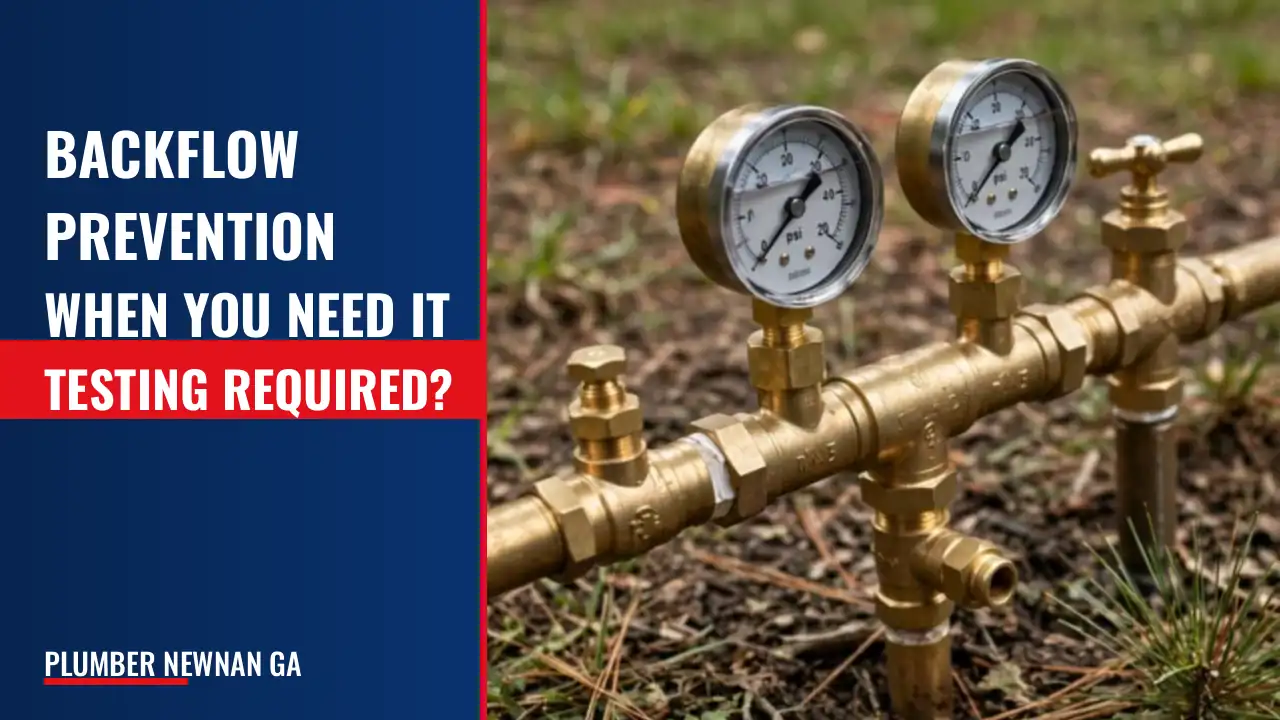
A check valve is a simple flap or spring that allows flow one way and blocks it the other. A reduced-pressure zone assembly uses two check valves plus a relief valve that dumps water if pressure between the checks rises, which is why it needs periodic testing. An air gap is the most reliable because it relies on empty space rather than moving parts. The right choice depends on the hazard level of what the water could contact and on what the local code accepts.
What causes backflow to happen in the first place?
Backflow happens when pressure in the public supply drops below the pressure in a private system, or when a private pump pushes water the wrong way. A water main break, heavy firefighting demand, or a closed valve can drop supply pressure. At the same time, a boiler, irrigation pump, or elevated tank can keep pressure on the private side, so water flows back toward the main.
The other cause is backpressure, where a pump or a temperature rise pushes water backward even when supply pressure is normal. In homes, the common risk points are hose bibs left in buckets, irrigation systems, boilers, and any fixture with a submerged inlet. A backflow preventer at each risk point stops the reversal before it reaches the drinking water.
When is a backflow preventer required?
A backflow preventer is required when a plumbing system creates a cross-connection that could contaminate the potable supply, and local rules or the water provider say so. Requirements vary by jurisdiction and by the type of property, so the exact answer depends on your water provider and the device in question. Common triggers include irrigation systems, fire sprinkler systems, boilers, and commercial kitchens.
For a typical home, the requirement often appears when you add an irrigation system or a boiler, or when the water provider mandates protection at the meter. For commercial property, testing is usually required at a set interval because the assemblies have moving parts that wear. A licensed plumber can tell you which device your system needs and whether testing applies.
What changes the answer for a house versus a business?
A house usually needs simpler protection than a business because the hazards are fewer and the piping is smaller. A home might have a dual check valve at the meter and hose-bib vacuum breakers, while a business with a boiler, a commercial kitchen, or a fire line often needs a reduced-pressure zone assembly and regular testing. The difference is the hazard level and the code that applies.
Property use matters more than size. A home-based business with a chemical sprayer or a large irrigation system can raise the hazard level above a plain house. Conversely, a small office with no special equipment may need only minimal protection. The answer changes with what the water could contact, not with the square footage.
What can I safely check or do myself?
You can safely check for obvious cross-connections and keep hose bibs from sitting in standing water, but you should not open, test, or alter a backflow assembly yourself. A backflow preventer is a code-regulated device, and testing it usually requires a licensed tester and a report to the water provider. Tampering with it can create a health hazard and may violate local rules.
A practical self-check is to walk the property and look for hoses left in buckets, irrigation heads below grade, and any connection between the water supply and a drain or boiler. If you find one, stop using that connection and have it corrected. For anything involving the assembly itself, the safe step is to call a licensed plumber rather than to disassemble it.
What are the common mistakes to avoid?
The most common mistake is removing or bypassing a backflow preventer because it drips or restricts flow. A dripping relief valve usually means the assembly needs service, not removal. Another mistake is assuming a hose-bib vacuum breaker is enough for an irrigation system, when the hazard may call for a testable assembly. Skipping the annual test on a testable device is also a mistake because a failed check valve can go unnoticed.
A further mistake is installing the wrong device for the hazard level, which can fail an inspection or leave the supply unprotected. Homeowners sometimes bury a testable assembly or box it in, making testing impossible. Keep the device accessible and keep the test records, because the water provider may ask for them.
Backflow prevention becomes a professional job when the device is testable, when it is part of a boiler or irrigation system, or when local rules require a licensed installer or tester. Testing and repair of a reduced-pressure zone assembly involve gauges, code knowledge, and a report to the water provider. A licensed master plumber can install, test, and document the device correctly.
The work also becomes professional when a cross-connection needs to be corrected at the piping level, because cutting into a supply line or a boiler loop carries risk of contamination or flooding. If you are unsure whether your system needs a device or a test, a plumber can identify the hazard and the required protection. For the service itself, see Backflow Preventer, and for the wider upkeep schedule, Plumbing Maintenance.
What is backflow prevention and when do you need it: questions answered
Here are the questions homeowners ask most about backflow prevention, answered plainly.
What is backflow prevention and when do you need it?
Backflow prevention is the use of a one-way device or air gap to stop water from flowing backward into the clean supply. You need it whenever a cross-connection exists, such as an irrigation line, a boiler, or a hose left in a bucket, and when local rules or your water provider require a device or test.
How does backflow prevention and when do you need it work?
A backflow preventer works by closing when pressure reverses, so water can only move in the intended direction. You need it when the hazard level of what the water could contact is high enough that a simple check valve is not accepted, which is why the device and the testing requirement depend on the system and the local code.
What should I know about backflow prevention and when do you need it?
Know that a testable assembly has moving parts that wear and must be tested on a schedule, and that removing or bypassing it is unsafe. You should also know that requirements vary by water provider, so the exact rule for your property comes from them or from a licensed plumber.
When does backflow prevention and do you need it matter?
It matters most when a pressure drop could pull contaminated water into the drinking supply, such as during a main break or heavy fire demand. It also matters at inspection or when you add irrigation, a boiler, or a commercial kitchen, because those changes often trigger a device or testing requirement.