
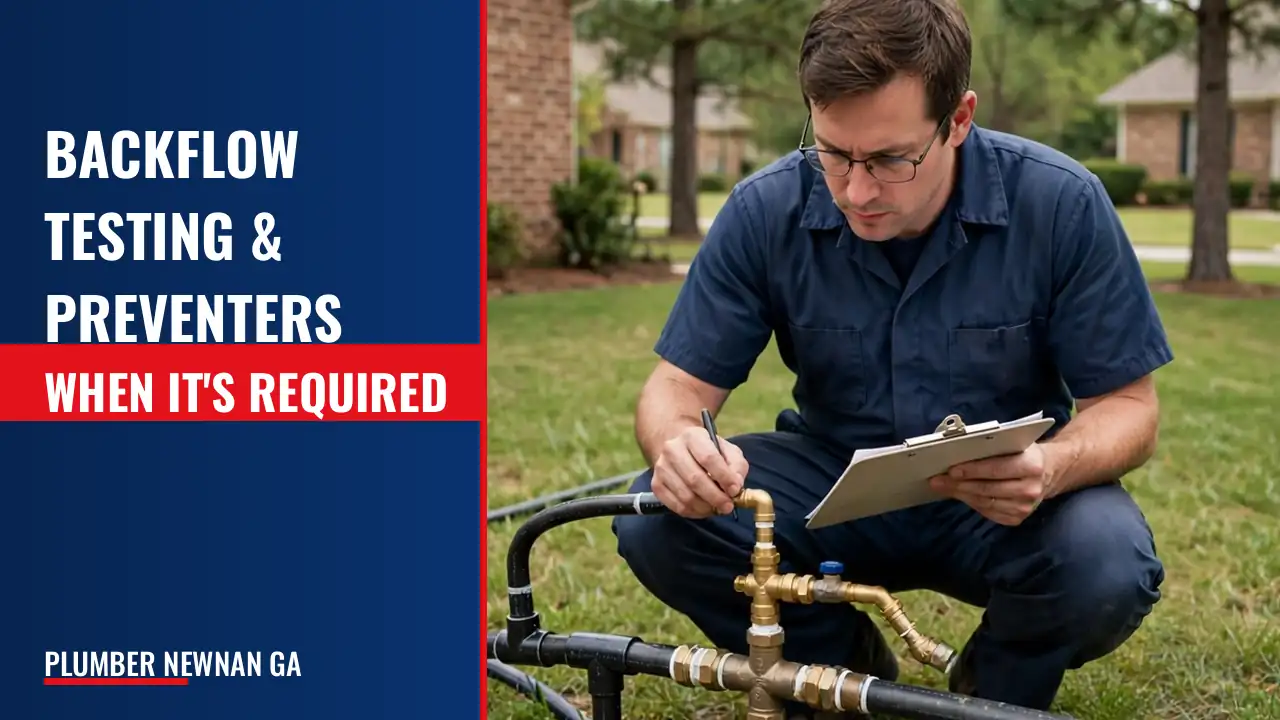
What backflow prevention is, and when you need it
Backflow prevention stops used water from flowing backward into your clean water supply. A backflow preventer is a valve or assembly that allows water to flow only one way, and testing is required when local rules or your water provider require it for the device you have. For more on plumbing topics like this, see our blog.
Most homes need one only if they have a lawn irrigation system, a boiler, a pool fill line, or another cross-connection.
How does backflow happen in a plumbing system?
Backflow happens when the pressure in the public water main drops below the pressure in your private pipes, or when a pump pushes water the wrong way. A water main break, heavy firefighting draw, or a nearby repair can drop main pressure in seconds.
When that pressure difference reverses, water sitting in a hose, irrigation line, or boiler can be pulled back into the supply that feeds your drinking taps. The risk is contamination, not just a nuisance, because the water that flows backward may have picked up fertilizer, soap, or bacteria.
Two conditions cause most backflow. Backsiphonage is a drop in supply pressure that sucks water backward. Backpressure is a pump or boiler that pushes water harder than the main supplies it. Both are common in homes with irrigation or heating equipment.
What does a backflow preventer actually do?
A backflow preventer is a one-way valve or assembly that closes when flow reverses, so water can leave your pipes but cannot return to the main. The simplest devices are check valves; more protective assemblies add relief ports or test cocks so a tester can confirm the seal holds.
The device sits at the point where a cross-connection meets the supply, such as the irrigation shutoff or the boiler feed. It protects the public supply first and your own plumbing second. A device that is stuck open does nothing, which is why testing and repair matter as much as installation.
Different assemblies protect against different hazards. A double check valve suits low-hazard connections. A reduced pressure zone assembly, often called an RPZ, adds a relief valve and is used where the hazard is higher. Your water provider sets which type your connection requires.
When is a backflow preventer required?
A backflow preventer is required when your plumbing has a cross-connection that could let contaminated water reach the public supply. In most homes that means an irrigation system, a boiler or hydronic heating loop, a pool or spa fill line, a fire sprinkler system, or a private well tied into the public main.
Many homes without any of those features have no cross-connection and no device requirement. Commercial buildings, restaurants, and any property with chemical injection or a large boiler usually face stricter rules. The exact requirement depends on your water provider and local plumbing code, so confirm with them before assuming you are exempt.
When is backflow testing required, and how often?
Backflow testing is required when the device you have is on a list your water provider or local authority requires to be tested, usually once a year. Testing means a certified tester connects gauges to the assembly and confirms the check valves and relief port seal in the right direction.
The interval is set by rule, not by the device's age. A newly installed assembly often needs its first test soon after installation, then on the required schedule. If you miss a test notice, the provider may treat the device as unprotected until a passing report is filed.
Testing is not the same as repair. A tester documents pass or fail; a failed assembly needs service or replacement before it can pass. Keep the test report, because it is your proof the device was checked on schedule.
What can a homeowner check safely, and what should they leave alone?
A homeowner can safely find the device, keep it clear of dirt and standing water, and check for visible leaks or damage. Look for a brass or bronze assembly near the irrigation shutoff, boiler, or where the private line meets the meter, and note any water pooling under it.
Do not open test cocks, remove a valve cap, or try to adjust the assembly yourself. Those parts are under supply pressure and a mistake can release water or damage the seal. Do not bury the device or box it in so tightly that a tester cannot reach the ports.
If you see a steady drip, corrosion, or a relief port that keeps discharging, stop using the connected system and have the device looked at. A failed device is not protecting you, and running the irrigation or boiler while it leaks can waste water and worsen the problem.
What changes the answer for your property?
The answer changes with the type of cross-connection, the hazard level your provider assigns, and whether the device is new, existing, or already failed. A high-hazard connection such as a boiler with chemical treatment usually needs a more protective assembly and stricter testing than a simple hose bib.
Property use matters too. A home office with no irrigation may need nothing, while a shop with a wash bay or a commercial kitchen likely needs a device and a test schedule. Renovations can add a cross-connection that did not exist before, so a remodel is a good time to recheck.
Water providers also differ in how they enforce the rule. Some send notices and require a certified test report; others inspect on their own schedule. The device's make and model determine what test procedure applies, so have the assembly's tag or paperwork ready when you ask.
What are the common mistakes with backflow prevention?
The most common mistake is assuming a device that was installed years ago is still working. A check valve can foul, stick, or corrode open, and without a test you have no way to know it still seals.
Another mistake is removing or bypassing a device to stop a drip or improve irrigation pressure. That leaves the cross-connection unprotected and can create a code problem. A third is skipping the test notice because the device looks fine; testing is the only proof it works.
Homeowners also confuse a hose-bib vacuum breaker with a full assembly. A small screw-on breaker protects one faucet, not an irrigation system or boiler. Match the device to the hazard, and let a licensed plumber confirm the setup.
When does backflow prevention become a job for a professional?
Backflow prevention becomes a professional job when a device must be installed, tested, repaired, or replaced, because those tasks require the right gauges, the correct assembly, and in many areas a certified tester.
Installation is not a DIY task when it involves cutting into a supply line, soldering or pressing fittings, or tying into a boiler. Testing is also regulated: the report usually must come from a recognized tester. A plumber who performs backflow prevention can install the device and coordinate the test so the paperwork is filed correctly.
If your device fails or you are unsure whether you need one, the safe next step is a professional inspection rather than a hardware-store valve. The same visit can check related plumbing, such as a water heater or sewer line, so you are not paying for a second trip. For the service behind this explanation, see backflow preventer; for the upkeep it belongs to, see plumbing maintenance.
Backflow prevention questions answered
Here are the questions homeowners ask most about backflow prevention and testing.
What is backflow prevention, and when is testing or a backflow preventer required?
Backflow prevention keeps used water from flowing back into clean supply, and testing or a device is required when your property has a cross-connection such as irrigation, a boiler, or a pool fill line that your water provider regulates. Homes without a cross-connection often need neither.
what is backflow prevention, and when is testing or a preventer required?
Backflow prevention is a one-way valve or assembly that blocks reverse flow, and a preventer is required where a cross-connection could contaminate the public supply. Testing is required on the schedule your water provider sets, usually annually for regulated assemblies.
how does backflow prevention, and when is testing or a preventer required work?
A preventer works by closing when flow reverses, and testing works by using gauges on the assembly's test ports to confirm each check valve and relief port seals. The test produces a pass or fail report that is filed with your provider.
what should I know about backflow prevention, and when is testing or a preventer required?
Know where your device is, keep it accessible, and never remove it to fix a drip. Testing is required when your provider lists your assembly, and a failed test means the device needs repair or replacement before it protects you.
Related reading: What is backflow prevention, and when do you need it?